Magicrete AAC Blocks: Sizes, Benefits & Price Guide
Magicrete AAC Blocks: Sizes, Benefits, Specifications and Buying Guide
Choosing the right walling material can influence construction speed, wall weight, thermal comfort, finishing requirements and the overall project budget. Magicrete AAC blocks are an option for builders, contractors, architects and developers looking for lightweight masonry units for residential, commercial and industrial projects.
At THE AAC BLOCKS – A Rodi Dust Enterprise, we help construction buyers understand AAC block options and source materials according to project requirements, location, quantity and delivery schedule.
In this guide, we explain what Magicrete AAC blocks are, their available sizes, key technical specifications, practical advantages, limitations and the factors to consider before ordering.
What Are Magicrete AAC Blocks?
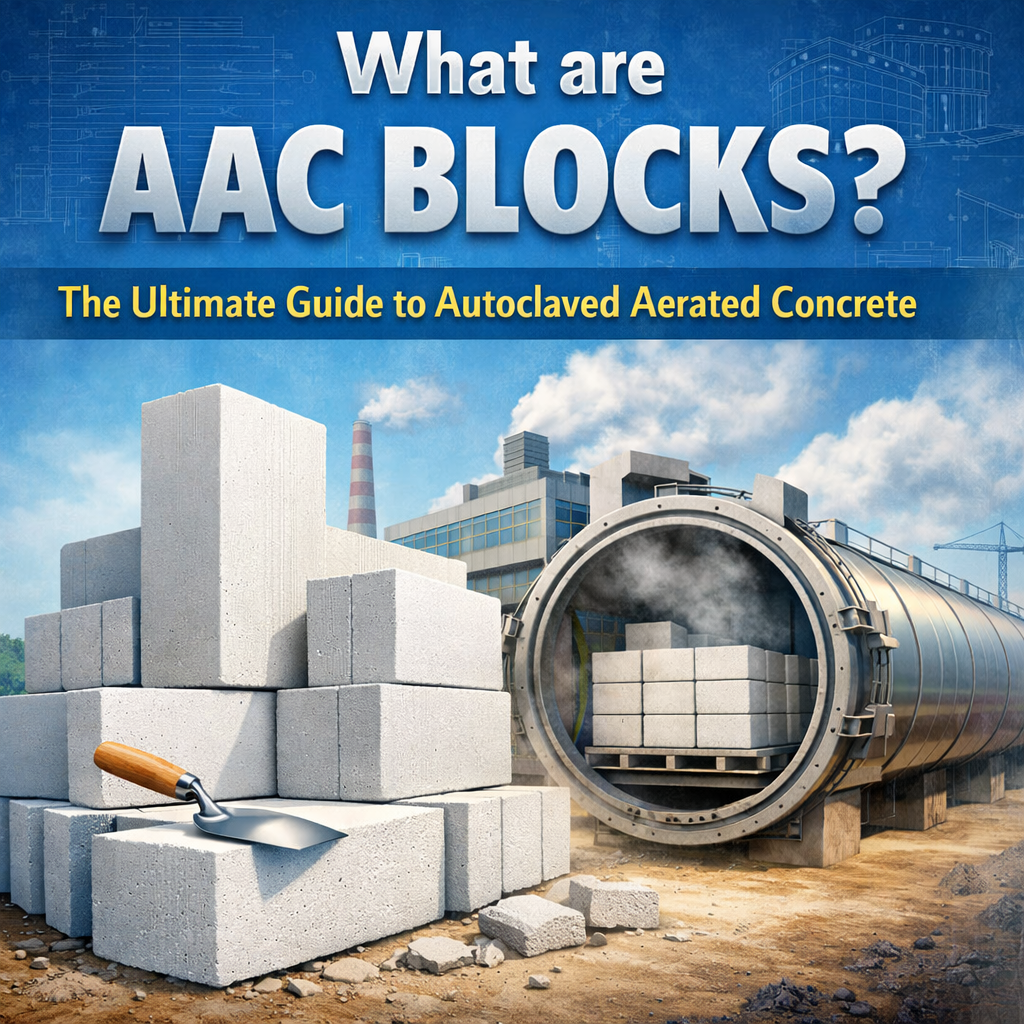
Magicrete AAC blocks are lightweight masonry units made from Autoclaved Aerated Concrete (AAC). The manufacturing process creates a cellular structure containing many small air pockets, helping reduce the material’s density and improve its thermal insulation compared with many conventional masonry materials.
According to Magicrete’s published product information, its AAC blocks use materials such as fly ash, cement, lime and aerating agents, followed by curing under controlled conditions in an autoclave.
The finished blocks are designed for wall construction and are available in different thicknesses to suit various building requirements.
In simple terms: Magicrete AAC blocks are lightweight, factory-manufactured walling units that can help construction teams build walls with consistent dimensions and thinner mortar joints when installed correctly.
Key Benefits of Magicrete AAC Blocks
1. Lightweight Construction
AAC blocks generally weigh less per unit volume than conventional clay brick masonry. This can reduce the weight of non-load-bearing walls and contribute to lower overall building dead load.
The actual structural benefit depends on the building design, wall layout, material specifications and the engineer’s calculations. Do not assume a particular reduction in steel or foundation cost without a project-specific assessment.
2. Thermal Insulation
The cellular structure of AAC helps slow heat transfer through walls. This may improve indoor thermal comfort and reduce cooling or heating demand, depending on climate, wall thickness, orientation, windows, insulation and building operation.
Magicrete publishes a thermal conductivity value of approximately 0.16 W/m·K for its AAC blocks. Confirm the applicable technical data sheet and test conditions for the product being supplied.
3. Consistent Dimensions and Efficient Installation
Factory-produced AAC blocks are manufactured to specified dimensions. Consistent sizing can make wall alignment easier and support the use of thin-bed AAC block adhesive.
For contractors, correct block sizing and proper installation can reduce unnecessary cutting, joint thickness variations and rework. Actual productivity depends on crew experience, site access, detailing and material handling.
4. Fire Resistance
AAC is a mineral-based, non-combustible walling material. The fire-resistance performance of a wall depends on factors such as wall thickness, construction details, joints and the tested assembly.
Magicrete publishes a fire-resistance rating of up to four hours for a 150 mm AAC wall. Check the relevant test report and specified wall assembly before using this value in project documentation.
5. Acoustic Performance
AAC walls can help reduce sound transmission. The result depends on wall thickness, density, plaster or finishes, openings, joints and flanking paths through the building.
For projects with specific acoustic requirements, use tested assembly data rather than relying only on a block-level claim.
6. Easier Cutting and Handling
AAC blocks can generally be cut and shaped with suitable tools, which helps accommodate services and site-specific dimensions. Their lower weight can also make manual handling easier than handling many heavier masonry units.
Use appropriate cutting equipment, dust control and personal protective equipment during installation.
Magicrete AAC Block Sizes
Magicrete lists AAC blocks in multiple dimensions and thicknesses. Common product options include:
| Parameter | Common options |
|---|---|
| Length | 600 mm; other formats may vary by plant |
| Height | 200 mm; other formats may vary by plant |
| Thickness | 100, 125, 150, 200 and 225 mm |
| Material | Autoclaved Aerated Concrete |
| Application | Residential, commercial, industrial and institutional walling |
Availability can vary by manufacturing location, production schedule and order quantity. Some plants may offer additional formats, including different block lengths or heights.
Before placing an order, confirm the exact length × height × thickness, dimensional tolerance, grade, quantity and delivery location. Do not calculate project quantities using nominal dimensions until the supplier confirms the actual block size.
Magicrete AAC Blocks: Technical Specifications
Magicrete’s published technical information includes the following indicative values:
| Technical parameter | Published value |
|---|---|
| Oven-dry density | Approximately 550–650 kg/m³ |
| Compressive strength | 4 N/mm² |
| Thermal conductivity | Approximately 0.16 W/m·K |
| Drying shrinkage | Approximately 0.04% |
| Fire resistance | Up to 4 hours for a specified 150 mm wall |
| Acoustic rating | Approximately 43 dB for a specified 100 mm wall |
Important: These are manufacturer-published figures, not a guarantee that every block size, batch or installed wall will achieve the same result. Refer to the latest technical data sheet, applicable test reports and project specifications before procurement or design approval.
For Indian construction projects, ask the supplier for documentation confirming compliance with the applicable AAC block standard, including IS 2185 (Part 3), where relevant to the product and its intended use.
Where Can Magicrete AAC Blocks Be Used?
Subject to the project design and product specifications, AAC blocks can be considered for walling in:
- Residential apartments and independent houses
- Commercial offices and retail buildings
- Hotels and hospitality projects
- Hospitals and educational institutions
- Warehouses and industrial buildings
- Partition walls and other specified masonry applications
The appropriate block thickness should be selected according to wall function, structural design, thermal and acoustic requirements, service routing and fire-safety provisions.
AAC blocks should not automatically be substituted for concrete or other materials in foundations, retaining walls, water-retaining structures or persistently damp locations. Confirm suitability with the design professional and product manufacturer.
Magicrete AAC Blocks vs Red Clay Bricks
Both materials can be used in building construction, but they differ in weight, dimensions, installation methods and thermal performance.
| Comparison factor | Magicrete AAC blocks | Traditional red clay bricks |
|---|---|---|
| Unit format | Larger factory-made blocks | Smaller masonry units |
| Wall weight | Generally lower for comparable walling | Generally higher for comparable walling |
| Jointing | Commonly installed with suitable AAC adhesive | Commonly installed with mortar |
| Thermal performance | Cellular structure provides insulation | Depends on brick properties and complete wall assembly |
| Installation speed | Larger units may speed up wall construction | More individual units and joints are generally required |
| Finishing | Depends on alignment, joints and specified finish | Depends on workmanship and brick quality |
| Delivered cost | Depends on price, freight, quantity and site access | Depends on brick price, freight and local availability |
There is no universal winner for every project. Compare complete installed wall costs and technical requirements, rather than comparing only the price of one block with the price of one brick.
What Is the Price of Magicrete AAC Blocks?
The price of Magicrete AAC blocks can vary by location, block thickness, order volume, freight distance, unloading arrangements, taxes and current plant availability.
A quotation should clearly state:
- Price per cubic metre (CBM), or the agreed unit of sale
- Block dimensions and thickness
- Applicable GST and other charges
- Freight and delivery terms
- Unloading responsibility and site access conditions
- Minimum order quantity, if applicable
- Dispatch schedule and payment terms
For a fair comparison, calculate the cost of the complete walling system. Include AAC blocks, adhesive or mortar, labour, transportation, unloading, cutting waste, plaster or other finishes, and any additional work required by the project design.
Request a project-specific quotation from THE AAC BLOCKS with your delivery location, required block thickness, estimated quantity and expected delivery date.
How to Calculate the Quantity of AAC Blocks
AAC block quantity depends on the net wall area and the face dimensions of the block.
A basic estimate is:
Number of blocks = Net wall area ÷ Face area of one block
For example, if the nominal face dimensions are 600 mm × 200 mm, the face area is:
0.6 m × 0.2 m = 0.12 m²
This gives a theoretical quantity of approximately 8.33 blocks per square metre before allowing for joints, openings, cutting, breakage and site wastage.
For an accurate order, calculate each wall separately, deduct doors and windows, confirm the manufacturer’s actual dimensions and follow the project’s measurement convention. For bulk procurement, a supplier can help prepare a quantity estimate from your drawings or BOQ.
How to Choose the Right Magicrete AAC Block Supplier
Before finalising a supplier, use this checklist:
- Confirm the brand and product: Ensure the quotation identifies Magicrete AAC blocks and the exact size required.
- Verify technical documents: Request the current technical data sheet, relevant test reports and applicable compliance documentation.
- Check delivered cost: Compare the complete delivered price, not just the ex-plant rate.
- Confirm supply capacity: Match the dispatch plan with your construction schedule and storage capacity.
- Plan unloading: Confirm vehicle access, unloading equipment, stacking area and responsibility for handling.
- Agree on payment and delivery terms: Put taxes, freight, lead time and other commercial conditions in writing.
- Inspect on delivery: Check dimensions, visible damage, quantity and batch documentation before accepting the material.
Order Magicrete AAC Blocks Through THE AAC BLOCKS
THE AAC BLOCKS, a Rodi Dust Enterprise, supports construction buyers looking to source AAC blocks for residential, commercial and institutional projects.
Whether you are a builder, contractor, architect, project procurement manager or property owner, share your requirement so the appropriate product and delivery arrangement can be evaluated.
For a quotation, provide:
- Project name and delivery city
- Required block thickness and dimensions
- Estimated quantity in CBM or units
- Required delivery schedule
- Any project-specific technical specifications
Contact THE AAC BLOCKS – A Rodi Dust Enterprise
Website: https://theaacblocks.com/
Phone: +91 8368-450-521 | +91 9582-872-872
Ask for current Magicrete AAC block availability, applicable specifications and a project-specific delivered quotation.
Frequently Asked Questions About Magicrete AAC Blocks
1. What are Magicrete AAC blocks?
Magicrete AAC blocks are lightweight Autoclaved Aerated Concrete masonry units made with a cellular structure. They are used for walling in suitable residential, commercial, industrial and institutional construction projects.
2. What sizes are available in Magicrete AAC blocks?
Commonly listed options include 600 mm lengths, 200 mm heights and thicknesses such as 100, 125, 150, 200 and 225 mm. Exact dimensions and availability vary by plant, so confirm the current product range before ordering.
3. What is the density of Magicrete AAC blocks?
Magicrete publishes an oven-dry density range of approximately 550–650 kg/m³. Actual supplied material should be checked against the relevant technical data sheet and test documentation.
4. What is the compressive strength of Magicrete AAC blocks?
Magicrete publishes a compressive strength of 4 N/mm² for its specified AAC block product. Verify the grade, applicable standard and test report for the material intended for your project.
5. Are Magicrete AAC blocks better than red bricks?
AAC blocks can offer advantages in lower wall weight, thermal insulation, block size and installation efficiency. The better choice depends on the project’s design, local material prices, workmanship, finish requirements and complete installed cost.
6. How much do Magicrete AAC blocks cost?
There is no single price applicable to every project. The quotation depends on size, quantity, plant location, freight, taxes and delivery terms. Request a delivered quotation for your project location.
7. Can Magicrete AAC blocks be used for exterior walls?
Yes, They are suitable for specified exterior wall applications when the block thickness, structural details, weather protection, joints and external finish are designed appropriately. Follow the manufacturer’s installation guidance and the project consultant’s specifications.
8. Do AAC blocks require special adhesive?
The AAC masonry is commonly installed using a compatible AAC block adhesive or thin-bed mortar. Follow the block manufacturer’s instructions and the project’s approved method statement for surface preparation, joint thickness and curing.
9. Are Magicrete AAC blocks suitable for every part of a building?
No. Suitability depends on the application. These blocks should not be assumed suitable for foundations, water-retaining structures or other demanding conditions without explicit design and manufacturer approval.
10. How can I order Magicrete AAC blocks in India?
Share your project location, block thickness, required quantity and delivery schedule with THE AAC BLOCKS. The team can help assess the requirement and confirm the applicable supply options, availability and quotation.
Final Thoughts
Magicrete AAC blocks are worth evaluating when a project requires lightweight masonry, consistent block dimensions and thermal insulation. The right buying decision should be based on verified technical documentation, correct installation, local delivered pricing and the building’s design requirements.
For help evaluating your AAC block requirement, contact THE AAC BLOCKS – A Rodi Dust Enterprise with your project details and request a quotation.
Useful links : https://www.magicrete.in/walling-solutions/aac-products/aac-blocks#TechnicalSpecification
What Are AAC Blocks? Benefits, Sizes, Manufacturing & Uses
Why Direct Factory AAC Block Procurement Is Failing Indian Developers | THE AAC BLOCKS

Best AAC Block Brands in India: Comparison Guide
About Author
