Today, direct factory AAC block procurement is becoming one of the biggest hidden risks in large-scale construction projects. Developers are realizing that the lowest purchase price often comes with the highest operational risk.
The modern Indian commercial high-rise is a marvel of engineering, but its supply chain is often stuck in the past. For decades, developers believed that procuring building materials directly from a single manufacturer’s factory was the ultimate way to secure the lowest price.
In today’s hyper-accelerated real estate market, that localized, single-factory mindset is a critical financial liability.
Here is why enterprise developers are abandoning direct-factory purchasing in favor of master aggregation models.
When project timelines, labor costs, and delivery commitments are at stake, a disrupted supply chain can quickly become a multi-million-rupee problem
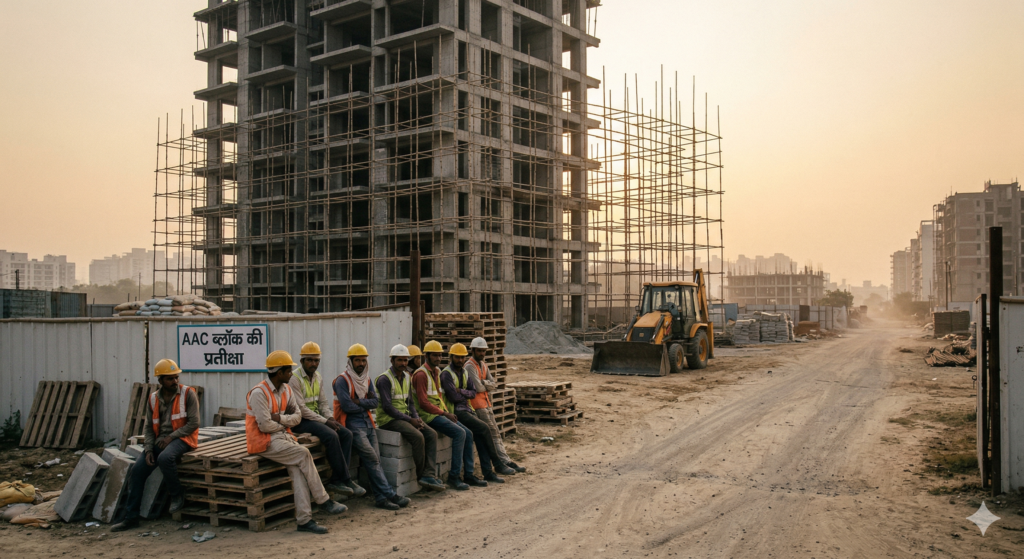
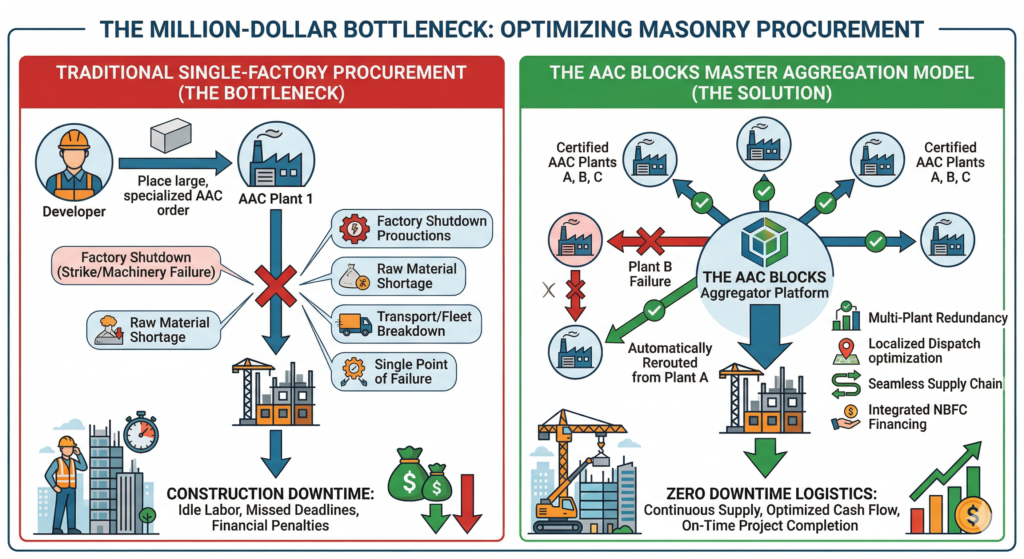
When you tie a 30-story commercial project to a single Autoclaved Aerated Concrete (AAC) block plant, your entire construction timeline is at the mercy of their localized issues. A sudden union strike, a fleet breakdown, raw material shortages, or regional power grid failures can halt block dispatches for days.
Construction site experiencing downtime due to delayed AAC block delivery from a single factory
In enterprise construction, the cost of the material is secondary to the cost of downtime. When masons stand idle, you burn through labor budgets, delay structural milestones, and risk severe penalties on your delivery handover dates.
The Master Aggregation Model (Multi-Brand Redundancy)
To eliminate this risk, modern procurement heads are routing volume through master B2B aggregators. An aggregator does not rely on a single facility. By pooling the output of India’s top-tier manufacturers—such as Magicrete, BirlaNu, and Biltech Siporex—an aggregator engineers a fail-proof supply chain.
If a plant in Haryana goes offline, an enterprise aggregator immediately reroutes dispatch from a secondary facility in Uttar Pradesh or Rajasthan, ensuring zero disruption to the site. You get the same IS 2185 Part 3 compliant blocks, but with an ironclad delivery guarantee.
Unlocking Enterprise Credit Lines
Beyond logistics, procurement is a game of cash flow. Single factories typically demand rigid payment structures that strain a developer’s working capital. Today’s elite aggregation platforms integrate deeply with NBFCs and financial technology platforms. This allows developers to unlock flexible supply chain financing, securing massive material volume while keeping their capital liquid for land acquisition and core operations.
The Verdict
Procurement is no longer just about negotiating the lowest per-CBM rate. It is about risk mitigation. Partnering with a dedicated wholesale AAC Block Supplier ensures your site has the multi-brand redundancy, integrated financing, and localized logistics required to build faster than the competition.
If you’re planning a residential, commercial, or industrial construction project, you’ve probably heard builders and architects recommend AAC blocks instead of traditional red bricks.
But what are AAC blocks, and why are they becoming the preferred choice for modern construction across India?
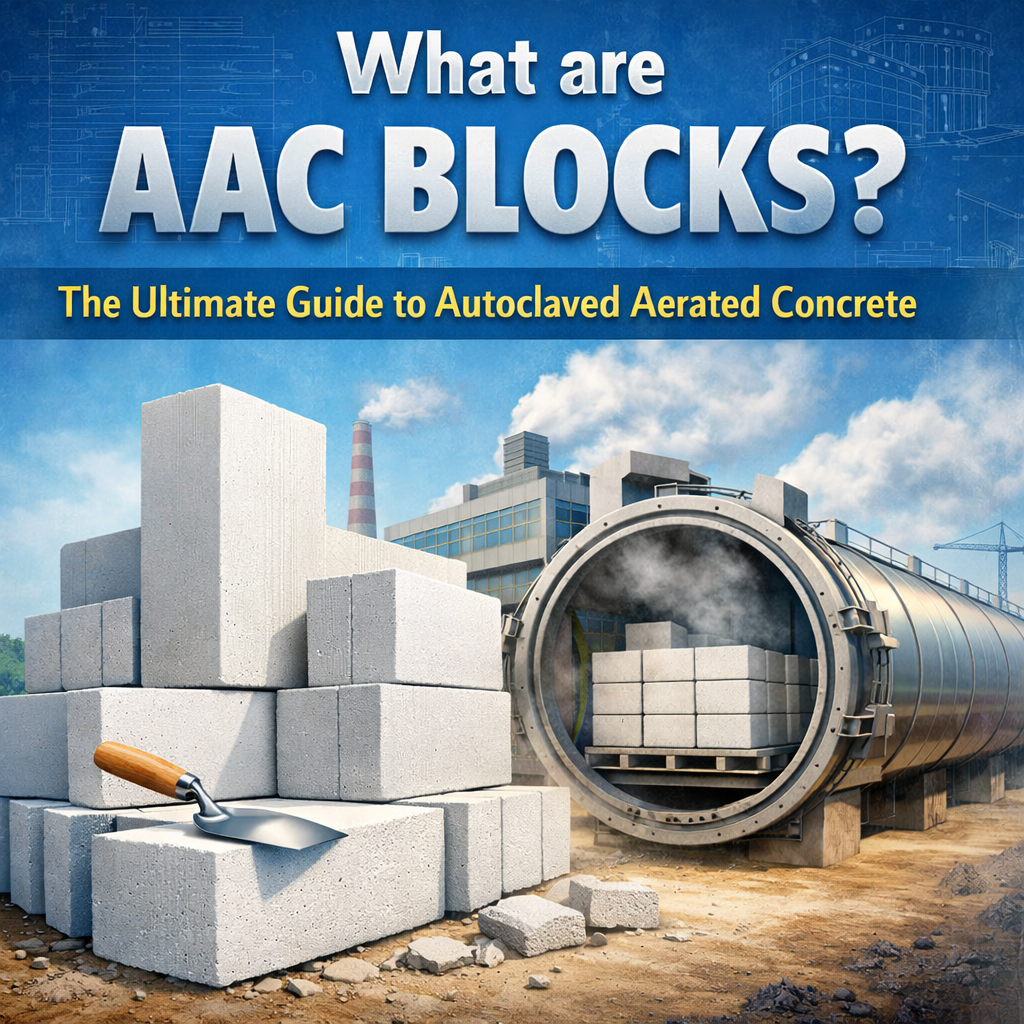
AAC (Autoclaved Aerated Concrete) blocks are lightweight, energy-efficient, and environmentally friendly building materials that offer better thermal insulation, faster construction, and lower structural loads compared to conventional clay bricks.
AAC stands for Autoclaved Aerated Concrete. These are lightweight precast concrete blocks manufactured using fly ash, cement, lime, gypsum, water, and a small quantity of aluminum powder.
During production, millions of tiny air pockets are created within the material. These microscopic air cells make AAC blocks significantly lighter than traditional bricks while providing excellent thermal and acoustic insulation.
These light weight blocks are widely considered environmentally responsible because they utilize industrial by-products such as fly ash, reducing landfill waste and conserving natural resources. Ministry of Environment, Forest and Climate Change
Unlike conventional clay bricks that consume fertile topsoil and require kiln firing, AAC blocks are manufactured in controlled factory environments using sustainable industrial by-products such as fly ash.
As a result, AAC blocks are considered one of the most eco-friendly walling materials available in India today.
How Are AAC Blocks Manufactured?
The manufacturing process of AAC blocks combines advanced chemistry with high-pressure steam curing technology.
Raw Materials Used in AAC Blocks
These lightweight concrete blocks are produced using :
Fly Ash (60–65%)
Cement
Lime
Gypsum
Aluminum Powder
Water
Each ingredient plays a specific role in achieving the block’s lightweight structure, strength, and durability.
Step 1: Aeration Process
The raw materials are mixed into a slurry and poured into moulds.
When aluminum powder reacts with lime and water, hydrogen gas is released, creating millions of tiny air bubbles throughout the mixture.
This expansion process forms a porous mass known as a green cake.
Step 2: Precision Cutting
Once partially hardened, the green cake is removed from the mould and cut into precise block sizes using automated steel wire cutting systems.
This process ensures dimensional accuracy and smooth surfaces.
Step 3: Autoclaving
The blocks are then placed inside autoclaves, where they are cured under high pressure and temperatures ranging from 180°C to 220°C.
This process forms Tobermorite crystals, which provide AAC blocks with their characteristic strength, durability, and long service life.
Top Benefits of AAC Blocks
1. Lightweight Construction Material
Autoclaved aerated concrete blocks typically have a densitytypically have a density of 550–650 kg/m³, making them nearly three times lighter than traditional red clay bricks.
This significantly reduces the dead load on buildings and can help lower foundation and structural costs.
2. Excellent Thermal Insulation
One of the biggest advantages of this masonry material is their thermal performance.
The trapped air pockets reduce heat transfer, helping maintain comfortable indoor temperatures throughout the year.
Many building owners report noticeable reductions in cooling costs after switching to AAC masonry.
3. Superior Sound Insulation
AAC walls effectively reduce external noise transmission, making them ideal for:
Residential apartments
Hospitals
Hotels
Educational institutions
Commercial buildings
4. Fire Resistance
These precast blocks are non-combustible and provide excellent fire resistance.
Depending on wall thickness, AAC walls can offer fire protection for several hours, improving building safety and compliance.
Fire-resistant building materials play an important role in modern construction and building safety practices. National Building Code of India (NBC)
5. Faster Construction
Because AAC blocks are larger and more dimensionally accurate than conventional bricks, masonry work progresses much faster.
When used with polymer-modified block jointing mortar, construction speed can increase significantly while reducing material consumption.
AAC Blocks vs Red Bricks
Feature
AAC Blocks
Traditional Red Bricks
Weight
Lightweight
Heavy
Thermal Insulation
Excellent
Moderate
Sound Insulation
Excellent
Average
Construction Speed
Faster
Slower
Mortar Requirement
Lower
Higher
Fire Resistance
High
Moderate
Sustainability
Eco-Friendly
Consumes Topsoil
Standard AAC Block Sizes in India
According to industry standards, These walling blocks are commonly available in:
Length: 600 mm/ 625 mm
Height: 200 mm or 250 mm
Available thicknesses:
75 mm
100 mm
150 mm
200 mm
225 mm
300 mm
Generally:
100 mm AAC blocks are used for internal partition walls.
200 mm AAC blocks are preferred for external walls due to better insulation and structural performance.
IS 2185 Part 3 Compliance for AAC Blocks
When purchasing autoclaved aerated concrete products, always verify compliance with IS 2185 (Part 3) issued by the Bureau of Indian Standards (BIS).
This standard specifies requirements related to:
Compressive strength
Density
Dimensional tolerance
Water absorption
Quality testing procedures
Choosing ISI-marked AAC blocks ensures consistent quality and long-term performance.
Why Builders Choose TheAACBlocks.com
Selecting the right supplier is just as important as selecting the right product.
TheAACBlocks.com is the digital procurement platform of Rodi Dust Marketing & Distributions Pvt. Ltd., serving contractors, developers, and infrastructure projects across India.
Our strengths include:
Multi-brand sourcing from leading AAC manufacturers
Reliable project-based supply planning
Dedicated transportation fleet
Direct factory coordination
IS 2185 Part 3 compliant products
Technical support for large projects
Whether you’re building a villa, apartment complex, warehouse, school, hospital, or commercial tower, our team helps ensure uninterrupted AAC block supply and competitive pricing.
Frequently Asked Questions
Are AAC blocks better than red bricks?
Yes, they generally provide better thermal insulation, faster construction, lower dead load, and improved fire resistance compared to traditional red bricks.
How long do AAC blocks last?
AAC blocks can last for decades when installed correctly and protected with proper finishing systems.
Are AAC blocks waterproof?
No, they are not completely waterproof, but they have controlled water absorption and perform well when used with proper plastering and waterproofing systems.
Which AAC block size is best for external walls?
Most builders prefer 200 mm thick AAC blocks for external walls due to their superior thermal and acoustic performance.
Conclusion
Autoclaved aerated concrete has transformed modern construction by offering a lightweight, durable, energy-efficient, and environmentally responsible alternative to traditional masonry materials.
With benefits such as lower structural loads, better insulation, faster construction, and long-term cost savings, AAC blocks continue to gain popularity among architects, engineers, developers, and homeowners across India.
Need project-specific guidance? Explore our complete AAC Blocks resource center on TheAACBlocks Blog.
For readers interested in construction standards and sustainable building practices, the following resources may be useful: