AAC vs Red Bricks: Cost, Benefits & Differences
AAC Blocks or Red Bricks: Choosing the Right Material for Your Building
Choosing between AAC vs red bricks is an important decision when planning a residential, commercial or industrial construction project. Both materials are widely used in India, but they differ in weight, thermal performance, installation speed, material handling and overall project cost.
AAC (Autoclaved Aerated Concrete) blocks are lightweight, factory-made masonry units with a porous internal structure. Red bricks, on the other hand, are manufactured by shaping and firing clay. Each material has its own advantages, and the right choice depends on your building design, local climate, construction budget and site requirements.
In this guide, we’ll compare their properties, practical benefits and limitations to help you make a more informed decision.
What Are AAC Blocks?
AAC blocks are lightweight precast concrete masonry units manufactured using materials such as fly ash or sand, cement, lime, gypsum, water and a small amount of an expanding agent.
During production, the mixture expands and develops millions of tiny air cells. The blocks are then cut to size and cured in an autoclave using high-pressure steam. This process produces a relatively lightweight material with consistent dimensions and useful thermal insulation properties.
Because individual units cover more wall area than conventional bricks, AAC masonry can also reduce the number of joints and help speed up installation when laid correctly.
What Are Red Bricks?
Red bricks are traditional masonry units made from suitable clay. The clay is shaped into bricks, dried and fired in a kiln to develop strength and durability. Their colour varies according to the clay composition and firing conditions.
Red bricks remain popular across India because they are widely available, familiar to local masons and suitable for a range of applications. Depending on their grade and design, they can be used for partitions, exterior walls, boundary walls and certain load-bearing applications.
As with any building material, the quality of the individual product matters. Brick strength, water absorption, dimensions and firing consistency can vary between manufacturers.
AAC vs Red Bricks: Key Differences
The main differences become clearer when both materials are compared across practical construction requirements.
| Feature | AAC Blocks | Red Bricks |
|---|---|---|
| Weight | Generally lightweight | Generally heavier |
| Unit size | Larger units | Smaller units |
| Installation | Can cover more wall area per unit | Requires more individual units |
| Thermal insulation | Generally better for equivalent conventional masonry | Depends on brick type and wall construction |
| Mortar requirement | Often lower with compatible thin-bed adhesive | Usually requires conventional mortar joints |
| Handling | Easier to handle per unit, but needs careful protection | Robust but heavier per unit of wall area |
| Availability | Depends on regional manufacturers and logistics | Widely available in many markets |
| Surface finishing | Accurate blocks may simplify finishing | Surface quality varies with brickwork |
| Environmental impact | Depends on ingredients, energy use and transport | Kiln firing and clay extraction contribute to impact |
Actual performance depends on product specifications, wall thickness, workmanship and the complete wall assembly. This comparison should be treated as a general guide rather than a substitute for engineering calculations.
1. Weight and Structural Considerations
One of the main reasons developers consider AAC is its lower density compared with conventional solid clay brick masonry.
Reducing the weight of non-load-bearing walls can reduce the dead load transferred to the building’s structural frame. Depending on the design, this may influence the loads on beams, columns and foundations.
However, the resulting savings are project-specific. They depend on the structural system, wall layout, floor heights, seismic requirements and the engineer’s calculations. AAC blocks should not automatically be treated as a replacement for structural or load-bearing masonry without confirming their suitability.
Red bricks may be appropriate where the structural design, local availability and established construction practices favour their use.
2. Thermal Insulation and Indoor Comfort
AAC blocks contain numerous air cells that slow the transfer of heat through the material. This can make them a useful option for buildings where indoor temperature control and energy efficiency are priorities.
The actual benefit depends on wall thickness, external finishes, window placement, ventilation, shading and the building’s overall design. AAC walls alone do not guarantee a particular reduction in electricity bills.
Red brick walls can also provide thermal mass and may perform well when designed for the local climate. In hotter regions, the right combination of wall construction, roof insulation, shading and ventilation is often more important than choosing a material in isolation.
For guidance on energy-efficient buildings, consult the Bureau of Energy Efficiency (BEE).
3. Construction Speed and Labour
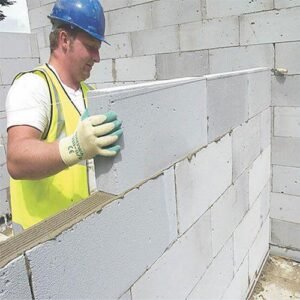
AAC blocks are larger than individual red bricks, so workers can cover more wall area using fewer units. Their relatively uniform dimensions can also make it easier to maintain straight courses and consistent joints.
When the blocks are compatible with a specified thin-bed jointing adhesive and installed by trained masons, masonry work can progress efficiently.
Red brickwork is familiar to many local construction teams, which can be an advantage where skilled bricklayers are readily available. However, more individual units and conventional mortar joints are usually needed to complete an equivalent wall area.
For either material, the final installation rate depends on workforce experience, site access, cutting requirements, scaffolding and the complexity of the building.
4. Mortar, Plastering and Finishing Costs
The cost of masonry is not determined by the price of each block or brick alone.
AAC blocks with accurate dimensions can reduce joint thickness when installed with a suitable adhesive. Their relatively even surfaces may also help control plaster consumption, provided the wall is built accurately and the specified finish allows it.
Red bricks generally require conventional mortar joints, and the final plaster requirement depends on the quality and alignment of the brickwork.
Before deciding, compare the total cost of materials, adhesive or mortar, labour, plaster, wastage, transport and any additional finishing work. Obtain quotations based on the same wall area and specified thickness to make the comparison meaningful.
5. Strength, Durability and Moisture Protection
Both materials can provide durable masonry when the correct product is selected and the wall is properly designed, built and protected.
For AAC blocks, check the declared compressive strength, dry density, dimensions, water absorption and relevant test reports. Because AAC is porous, suitable plastering, weatherproofing details and protection from prolonged water exposure are important.
For red bricks, check the grade, strength, water absorption, dimensions and consistency of firing. Poor-quality bricks or inadequate construction practices can lead to cracking, dampness and other maintenance issues.
The choice of material should also account for wet areas, exposed walls, the local climate and compatibility with plaster, coatings, anchors and other finishes.
6. Fire and Sound Performance
AAC and clay masonry are both non-combustible materials, but the fire resistance of a finished wall depends on its thickness, construction details, joints and any applied finishes. Always refer to tested wall assemblies and the applicable building requirements rather than relying on a general claim.
Sound insulation also depends on wall mass, thickness, workmanship and the surrounding building elements. A thicker or heavier wall may perform differently from a lighter wall, but material type alone does not determine the final acoustic result.
For apartments, hotels, offices and healthcare buildings, review the acoustic and fire requirements for the intended use before finalising the wall specification.
7. Environmental Impact and Material Waste
Environmental performance depends on how a material is manufactured, transported, installed and maintained.
Red bricks are fired in kilns, which consume energy, while clay extraction can affect local land resources. AAC production can incorporate industrial by-products, such as fly ash, depending on the manufacturing process and product formulation. Its lighter weight may also reduce transport loads for comparable wall areas.
Neither material is automatically the more sustainable choice in every situation. Manufacturing energy, transport distance, breakage, cutting waste and service life should all be considered.
For projects targeting green-building performance, the GRIHA Council and Indian Green Building Council provide useful resources on sustainable building practices and green-building assessment.
Which Material Is More Economical?
The more economical option is the one that delivers the required performance at the lowest overall project cost—not necessarily the one with the lowest purchase price.
A fair comparison should include:
- Material cost for the same wall area and thickness
- Delivery charges and unloading
- Mortar or block-jointing adhesive
- Masonry labour and installation time
- Plastering and finishing
- Breakage and wastage
- Structural implications, where applicable
- Maintenance and moisture protection
AAC may offer advantages through lower wall weight, faster installation and reduced jointing material. Red bricks may be competitive where supply is local, transport costs are low and experienced masons are readily available.
Ask suppliers to quote against the same project specifications, and compare the complete installed wall cost before making a decision.
How to Choose the Right Material for Your Project
Before placing an order, consider the following questions:
- What is the building design? Confirm whether the walls are partitions, infill walls or part of a designed load-bearing system.
- What performance is required? Consider thermal comfort, fire resistance, acoustics and exposure to moisture.
- What is available locally? Check delivery lead times, unloading arrangements and replacement availability.
- What is the total installed cost? Include labour, jointing materials, plastering, transport and wastage.
- Can the supplier verify quality? Request product specifications, applicable certifications and current test reports.
- Is the installation team experienced? Ensure the contractor understands the selected material and its recommended installation method.
For AAC products in India, consult the Bureau of Indian Standards (BIS) for relevant standards and certification information. Verify the applicable standard and the manufacturer’s documentation for the specific product being purchased.
Frequently Asked Questions
Are AAC blocks better than red bricks?
AAC blocks may be a better choice when lower wall weight, thermal insulation and faster installation are priorities. Red bricks may suit projects where local availability, familiar workmanship or particular design requirements favour traditional masonry. The better option depends on the project.
Which material is cheaper for construction?
Neither is always cheaper. Compare the cost per square metre of the completed wall, including delivery, labour, mortar or adhesive, plaster and wastage.
Can AAC blocks be used for external walls?
Yes, AAC blocks are commonly used for external infill walls when the product, thickness, structural design and weatherproofing details are appropriate for the project.
Do AAC blocks require special adhesive?
Thin-bed block-jointing adhesive is commonly used with suitable AAC blocks. Follow the manufacturer’s installation instructions and use a compatible product.
What should I check before buying masonry materials?
Check dimensions, strength, density where applicable, water absorption, quality documentation, transport arrangements and suitability for the intended application. Consult your structural engineer where the material affects the building design.
Final Verdict: AAC Blocks or Red Bricks?
There is no single answer for every building. AAC blocks can be attractive for projects prioritising lower wall weight, thermal performance and efficient installation. Red bricks remain a practical option where their availability, characteristics and established construction methods suit the project.
The best decision comes from comparing verified product specifications and the full installed cost against the building’s engineering and performance requirements.
At Rodi Dust, we recommend evaluating masonry materials on quality, suitability, logistics and total project value—not simply the quoted unit price. Discuss your wall specifications and delivery location with your supplier before finalising the order.
*learn more about AAC blocks and their properties
Explore construction material sourcing with Rodi Dust
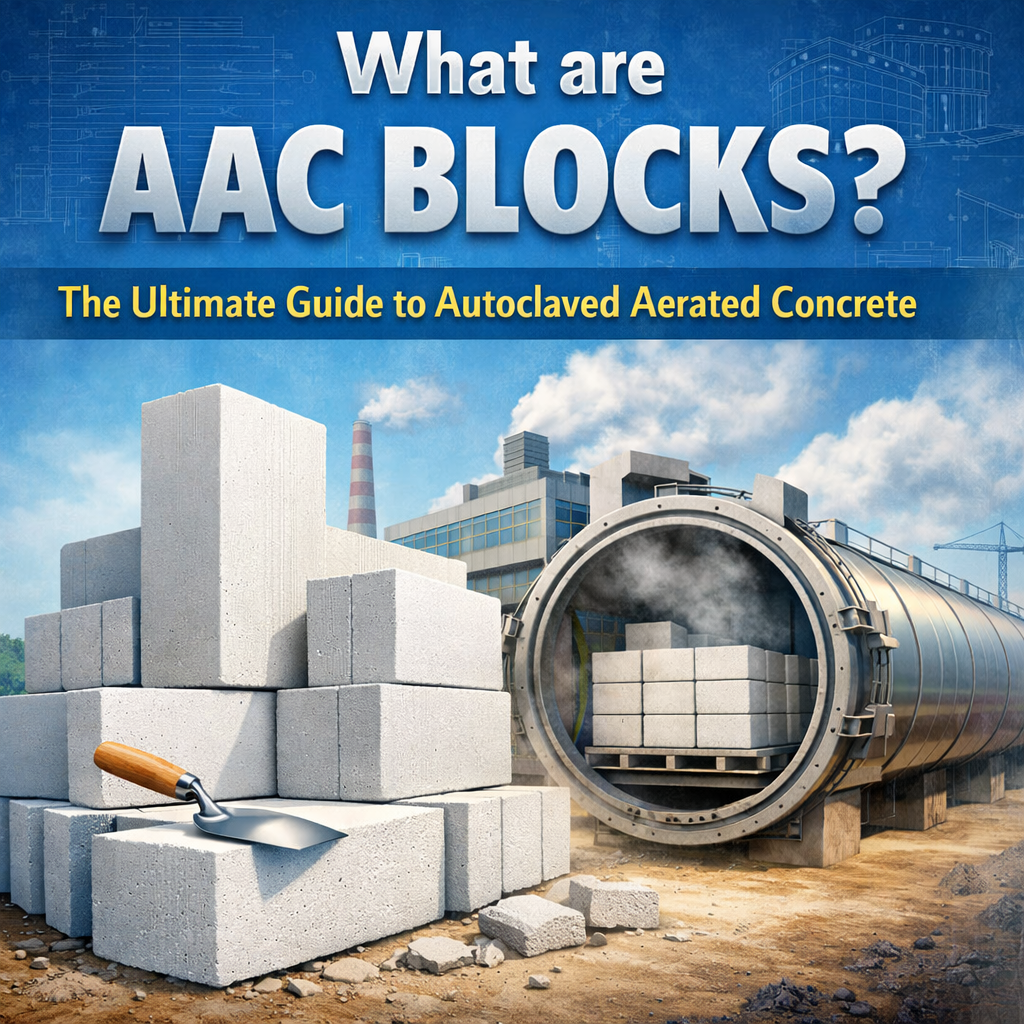
What Are AAC Blocks? Benefits, Sizes, Manufacturing & Uses

Why Direct Factory AAC Block Procurement Is Failing Indian Developers | THE AAC BLOCKS

AAC Blocks in Gurugram: Prices & Top Brands
About Author
